





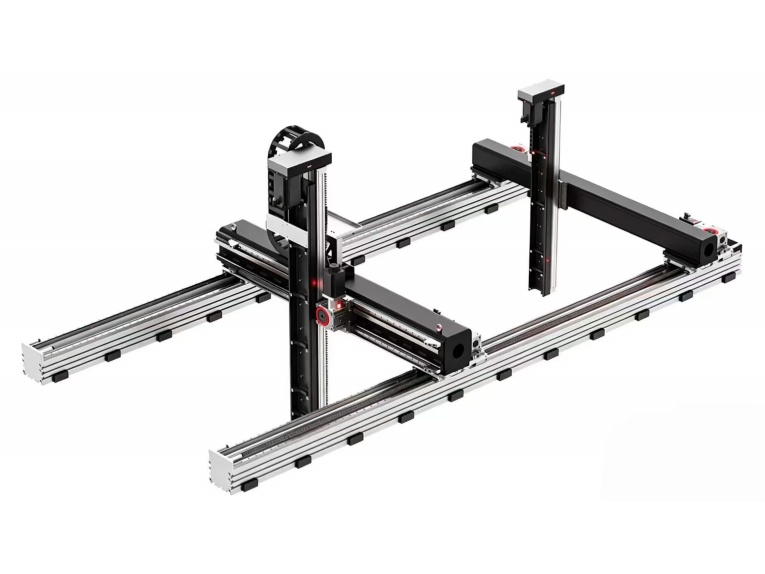
When it comes to linear motion systems, the choice between a belt driven linear actuator and a ball screw linear actuator can significantly impact your machine’s performance, cost-efficiency, and longevity. Each technology has unique strengths tailored to specific industrial needs.
What is a Belt Driven Linear Actuator?
A belt driven linear actuator is engineered for high-speed, long-stroke applications. It uses a timing belt system to convert rotary motion into linear motion, making it ideal for fast, continuous motion with minimal noise.
Key Benefits:
1. High-speed performance
2. Quiet operation
3. Low maintenance
4. Perfect for long travel distances
What is a Ball Screw Linear Actuator?
A ball screw linear actuator provides exceptional accuracy, repeatability, and load-bearing capacity. Its screw-driven mechanism offers minimal friction, ensuring consistent and precise movement—perfect for demanding automation systems.
Key Benefits:
1. High precision and repeatability
2. Superior rigidity and load capacity
3. Smooth, consistent motion
Which Linear Actuator Should You Choose?
The choice boils down to your application’s demands:
- Choose a belt driven linear actuator if your project requires:
1. Fast, continuous motion
2. Long-stroke travel
3. Lower cost and minimal upkeep
-
Opt for a ball screw linear actuator if your system needs:
1. High positioning accuracy
2. Heavy load capacity
3. Smooth and repeatable precision motion
Post time: Sep-02-2026