





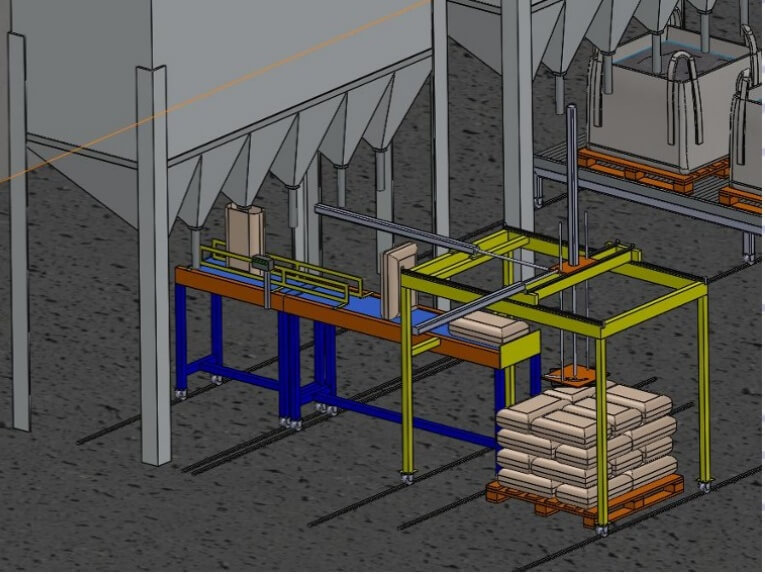
Designing a gantry system involves carefully balancing multiple engineering factors to meet the desired performance. A gantry that is fast may sacrifice some precision; one that handles heavy loads might need to be larger or slower. Here are the core design considerations and challenges one must address:
Load Capacity
Load capacity is paramount, considering both static (payload weight) and dynamic (acceleration/deceleration forces) loads. Structural elements and bearings must be sized with a safety margin, using FEA for frame optimization. Modern gantries handle diverse loads, from micro-assembly to heavy material handling, requiring appropriate motor and gearbox selection.
Speed and Precision
Speed and precision often present a trade-off. High-speed gantries face challenges with inertia and vibration, potentially impacting accuracy. Precision involves accuracy and repeatability, with high-end systems achieving micron-level precision. Design considerations include minimizing backlash, using feedback devices, and ensuring structural stability. Engineers often define performance envelopes, balancing speed and precision through control algorithms.
Rigidity and Vibration Damping
Rigidity minimizes flex and resonance, crucial for accuracy. Design techniques include box-section beams, bracing, and dual-rail designs. High-speed gantries may incorporate vibration damping mechanisms like tuned mass dampers. Secure mounting to a stable base is essential, balancing rigidity with weight and cost.
Environmental Factors
Gantries must withstand environmental challenges: temperature variations, humidity, dust, and external vibrations. Temperature changes affect material dimensions, requiring compensation. Dusty environments necessitate protective covers. Cleanrooms demand low-particulate components. External vibrations may require isolation or damping. Cleanliness and maintenance are crucial in medical or food applications.
Control and Integration Challenges
Achieving synchronized multi-axis movement requires precise tuning of motion controllers. Large gantries necessitate synchronized dual drives. Software and PLC logic must handle safety conditions. Integration with other systems, like conveyors and vision systems, demands standard interfaces and real-time networks.
Safety
Safety is critical, with guarding, failsafes, and collision sensors essential. Control systems must prevent crashes and gravity-induced falls. These considerations are vital for practical implementation.
Post time: Nov-02-2026