





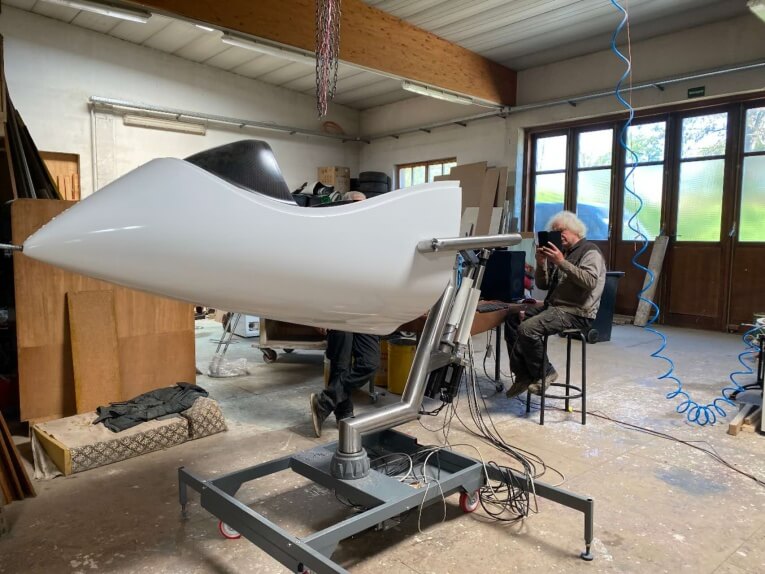
In the field of motion control for VR amusement rides, two main drive systems are commonly used — electric cylinder braking and crank braking. Both play a key role in achieving realistic motion, ensuring safety, and maintaining equipment reliability. We will compare these two systems from five perspectives: structure, differences, pros and cons, VR application performance, and market trends.
1. What Is Electric Cylinder Braking?
Electric cylinder braking (also known as servo actuator braking) uses a servo motor to control linear motion through a screw or ball screw structure. It provides precise, programmable, and repeatable motion with a natural self-locking ability when stopped, ensuring stable braking and high safety.
- High precision positioning and smooth linear motion
- Adjustable speed, stroke, and force
- Low noise and high reliability
- Easy integration with VR control systems
- Minimal maintenance requirements
2. What Is Crank Braking?
A crank mechanism converts the rotational motion of a motor into linear movement using a connecting rod and crank arm. Its braking performance depends on mechanical friction or motor torque, and the motion curve is fixed based on the crank geometry.
- Simple and low-cost design
- Stable and repetitive movement
- Limited flexibility and precision
- Higher noise and maintenance frequency
3. Main Differences Between Electric Cylinder and Crank Mechanism
| Motion Control | Servo-controlled, programmable, highly flexible | Fixed curve motion, limited flexibility |
| Positioning Accuracy | ±0.01 mm precision | Low accuracy |
| Noise Level | Quiet operation | Mechanical noise and vibration |
| Braking Method | Self-locking screw + servo torque | Mechanical resistance |
| Maintenance | Minimal; electronic-based | Requires frequent lubrication and part replacement |
| Durability | Long service life | Shorter due to mechanical wear |
| Integration with VR Systems | Easy digital control, smooth synchronization | Difficult to match VR motion data |
| Initial Cost | Higher | Lower |
| Long-term ROI | High; low maintenance and energy saving | Lower due to mechanical losses |
4. Pros and Cons Summary
| Category | Electric Cylinder | Crank Mechanism |
|---|---|---|
| Advantages | – High precision and smooth motion – Servo feedback ensures safety – Easy integration with VR control – Quiet, low maintenance – Long life span |
– Simple structure – Low manufacturing cost – Reliable for repetitive simple motion |
| Disadvantages | – Higher cost – Requires servo control system |
– Low accuracy – High noise and vibration – Shorter life span – Poor braking safety |
5. Market Analysis: Which Motion System Is More Popular in the VR Amusement Market?
Based on current industry data, over 80% of high-end VR amusement rides now adopt electric cylinder braking systems instead of crank drives. This trend is driven by the need for precise motion control, long-term reliability, and immersive synchronization with VR content. Electric cylinders deliver more realistic, safe, and responsive movement — essential factors for premium VR experiences.
6. Application in VR Amusement Equipment
In VR motion simulators, accuracy, safety, and responsiveness directly affect the player’s comfort and immersion. Electric cylinders provide real-time control, enabling lifelike effects such as free fall, tilt, rotation, and acceleration — all synchronized with VR content within milliseconds.
FUYU has integrated servo electric cylinder systems into its major VR products, ensuring maximum stability, durability, and safety.
7. Why Electric Cylinder Is the Future of VR Amusement
Electric cylinder braking represents the next generation of VR motion technology — combining digital precision, reliability, and immersive realism. It enhances ride quality, reduces mechanical wear, and lowers long-term maintenance costs. For VR amusement manufacturers, adopting electric cylinder technology means achieving smarter control, safer operation, and higher user satisfaction.
Conclusion: While both systems have their strengths, the electric cylinder braking system clearly stands out for modern VR amusement applications. It offers smoother motion, higher precision, lower noise, and better compatibility with digital control systems — making it the preferred choice for the future of immersive entertainment.
Post time: Jun-30-2026